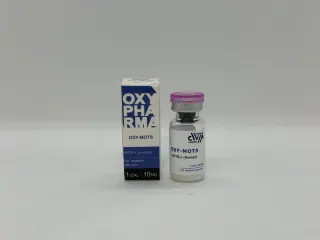
Properties and mechanism
Mechanistic work describes effects on cellular pathways including folate metabolism and AMPK. The connection between this molecular signal and sustained performance in people requires its own evidence.
Why it comes up in bodybuilding
Bodybuilders may encounter MOTS-c in discussions of endurance, handling of carbohydrates and training during a calorie deficit. Mouse metabolism experiments cannot tell whether those goals are achieved in people.
What research shows
Preclinical work includes improvements in insulin sensitivity in mouse models. FDA found no human exposure data for administered native MOTS-c drug products in its safety assessment.
- Biological targetMechanistic work describes effects on cellular pathways including folate metabolism and AMPK.
- Observed outcomesPreclinical researchPreclinical work includes improvements in insulin sensitivity in mouse models.
- Limits in sportAn endogenous peptide being present in people does not prove that administering it is safe or reproduces the effects of exercise.
The category describes the type of source, rather than an effect size.
Side effects and health risks
- The consequences of administered MOTS-c in people, including effects on glucose regulation, are not adequately characterised.
- Peptide impurities, aggregation and immune reactions are concerns for compounded products.
What is still unknown
An endogenous peptide being present in people does not prove that administering it is safe or reproduces the effects of exercise.
Primary sources
Products listing this substance
Catalogue entries describe label contents. Individual listings may contain other ingredients.
Showing Lithuanian catalogue entries. Select a market to see its listings. LietuviųLatviešuEesti